On the nineteenth of September I came specially to write a quick post about the C919. It seems to be the second anniversary of China Southern’s first C919 flight, and I do not know whether Air China’s is today as well.
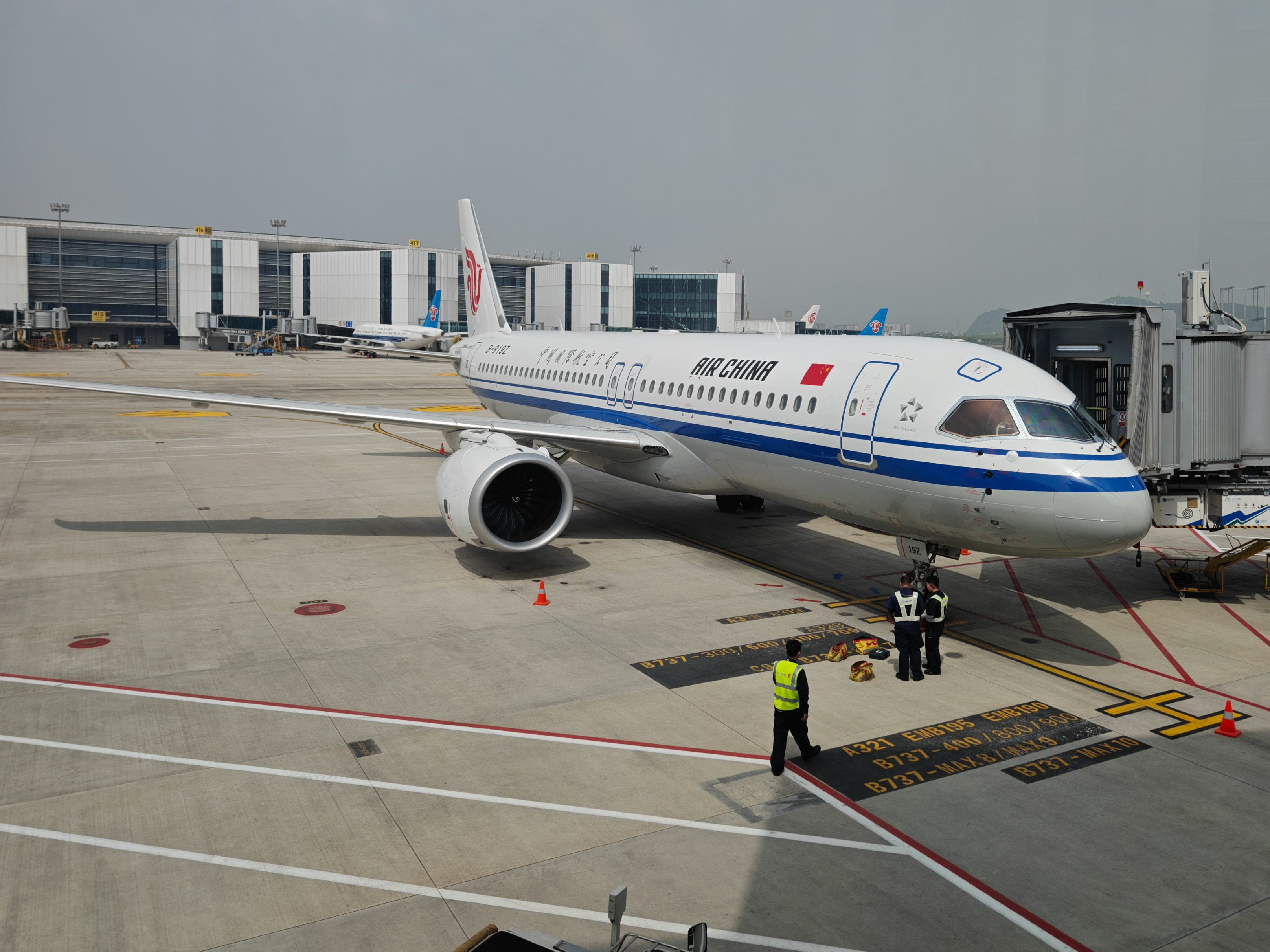
The first time I saw a 919 was on a trip out of Hangzhou, when I spotted a C919 parked at the next gate from the jet bridge, registration 919Z, Air China’s third 919.
I actually flew on a 919 on the way back from Beijing to Hangzhou, having deliberately picked a flight operated by a 919. Thanks to Air China for not changing it at the last minute.
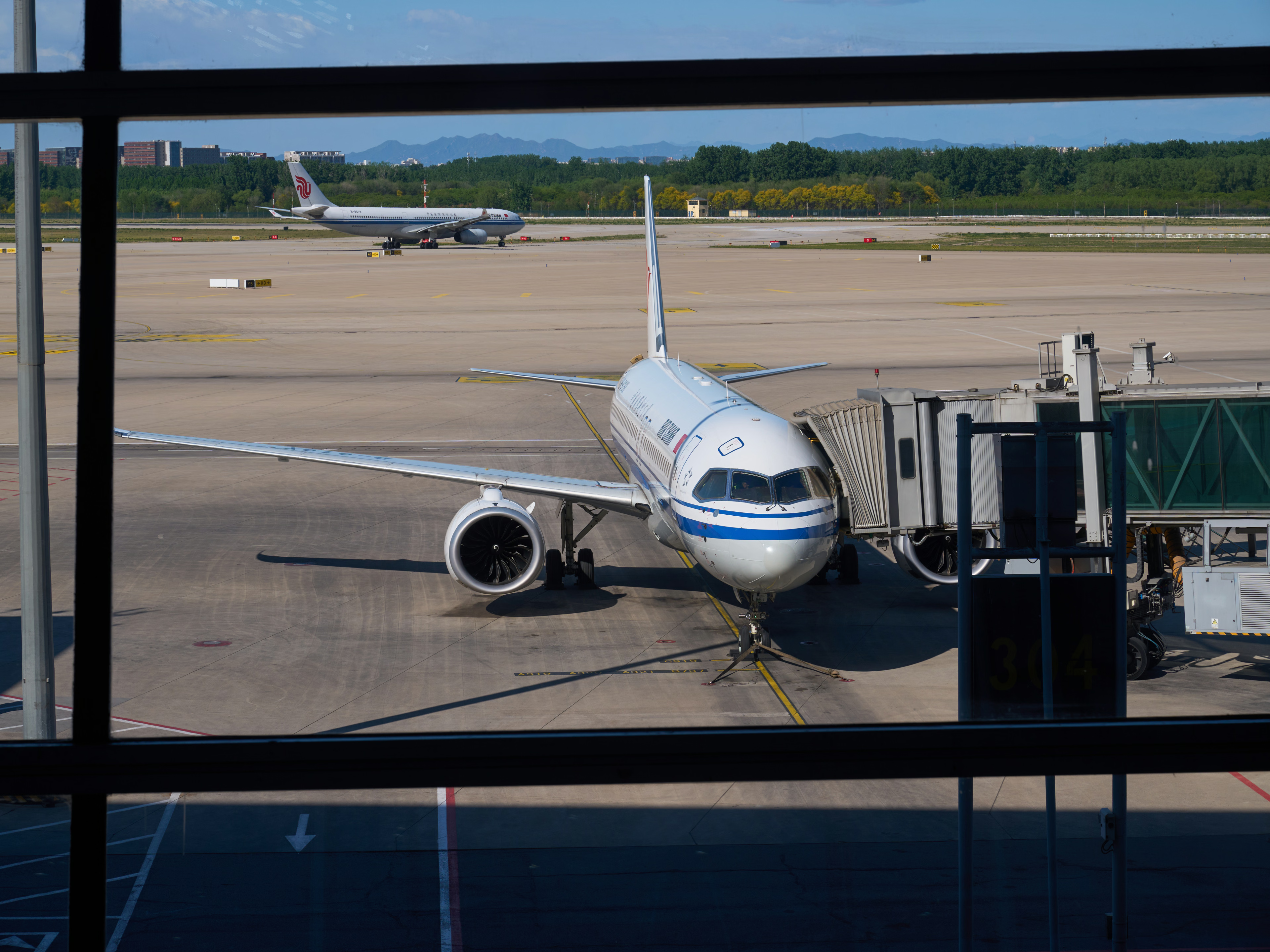
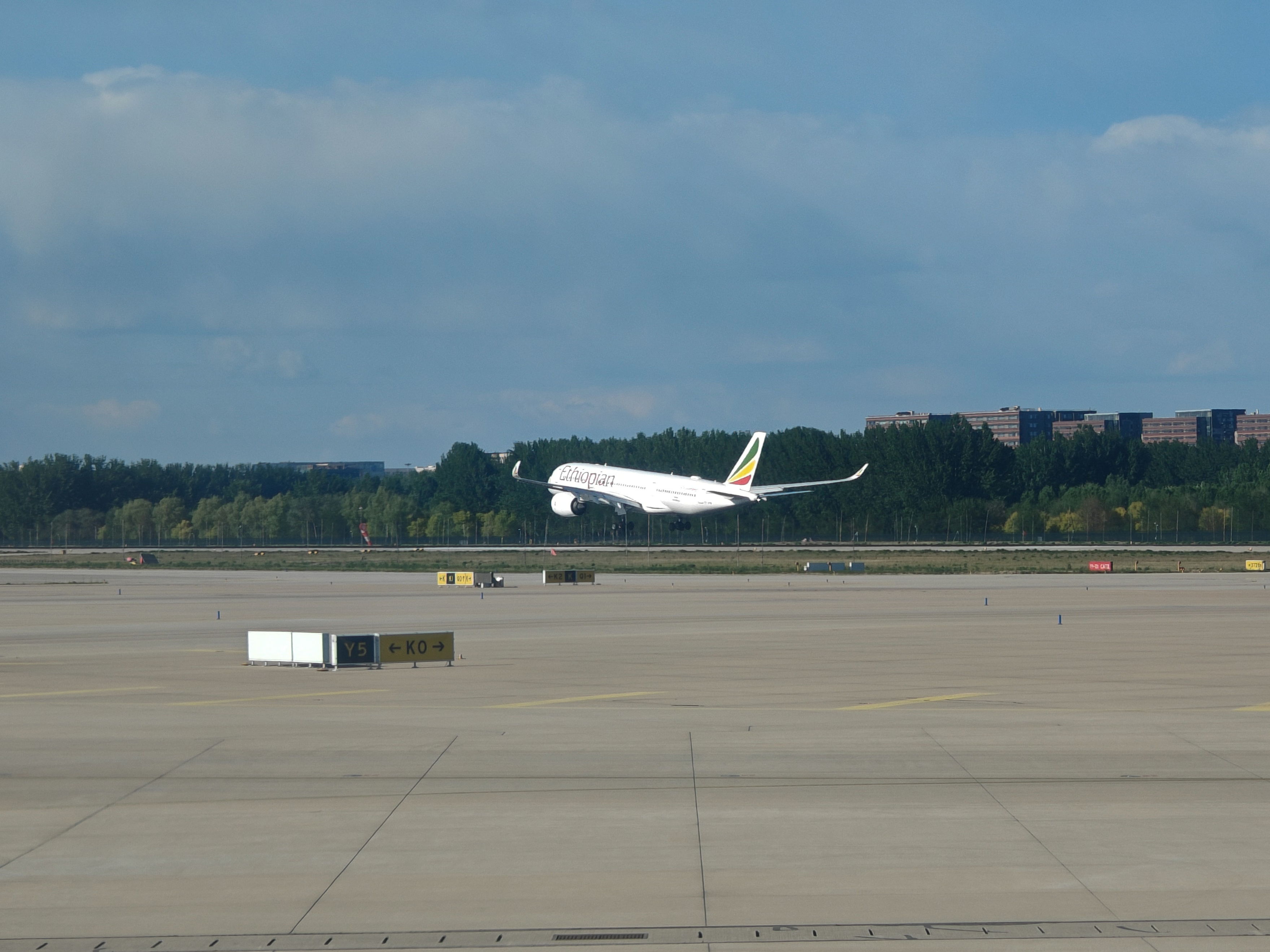
At Capital Airport the gate is very close to the security checkpoint, and given the runway direction in use that day, the stand was also extremely close to the runway. The taxi time before take-off cannot have been more than three minutes.
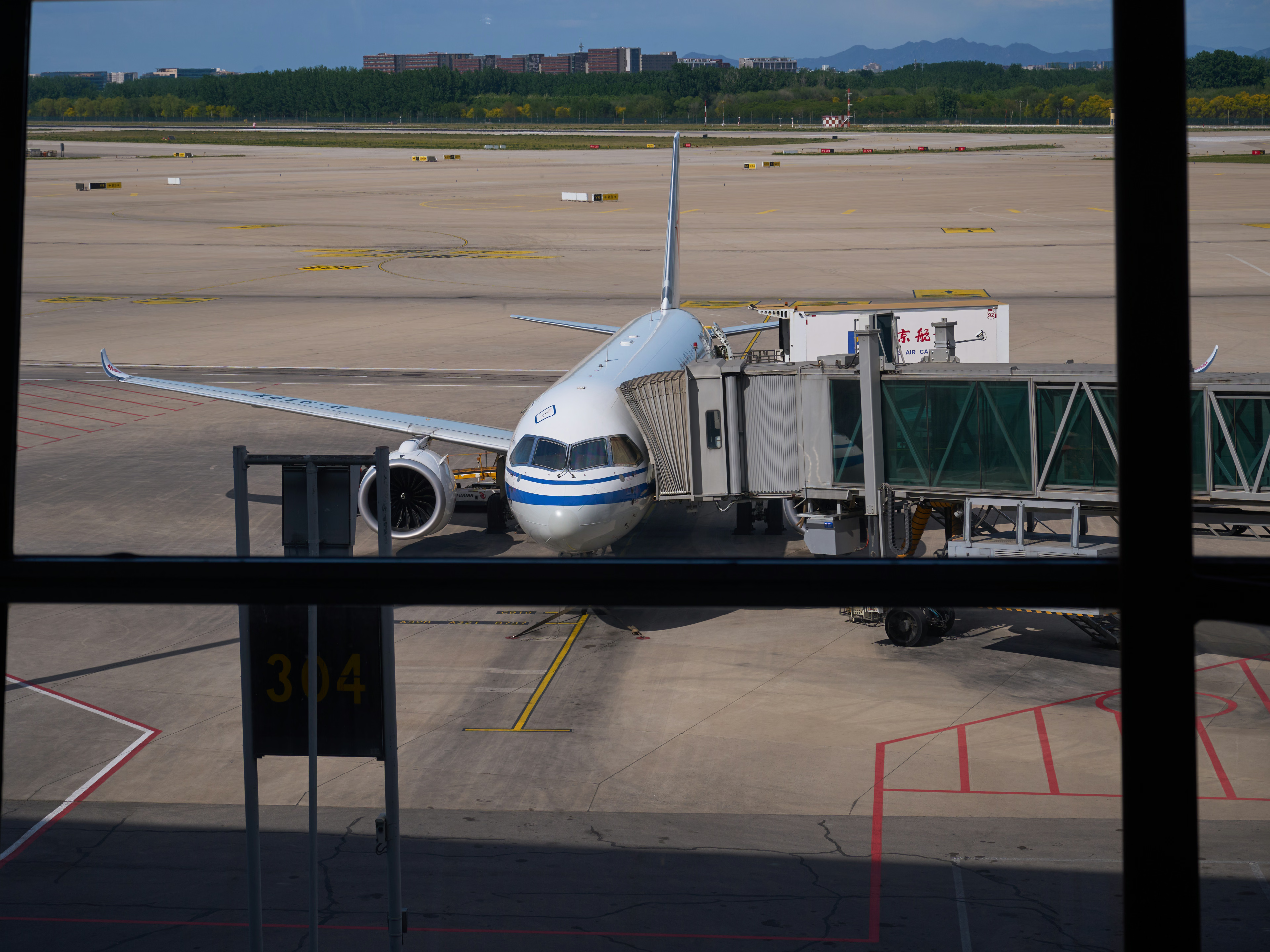
The nose of the C919 is very streamlined, like a narrowbody version of the 787, smoother than both the 320 and the 737.
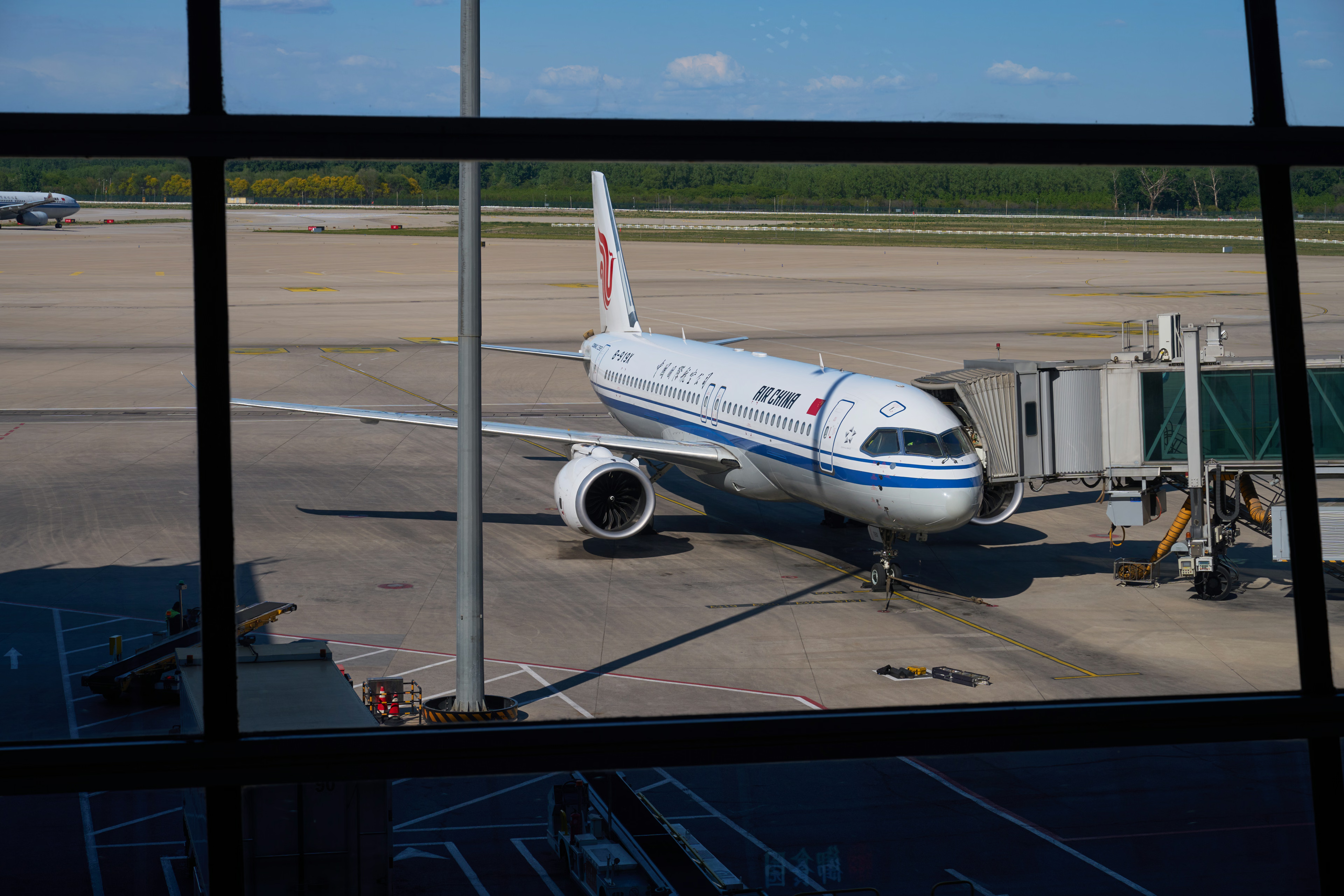
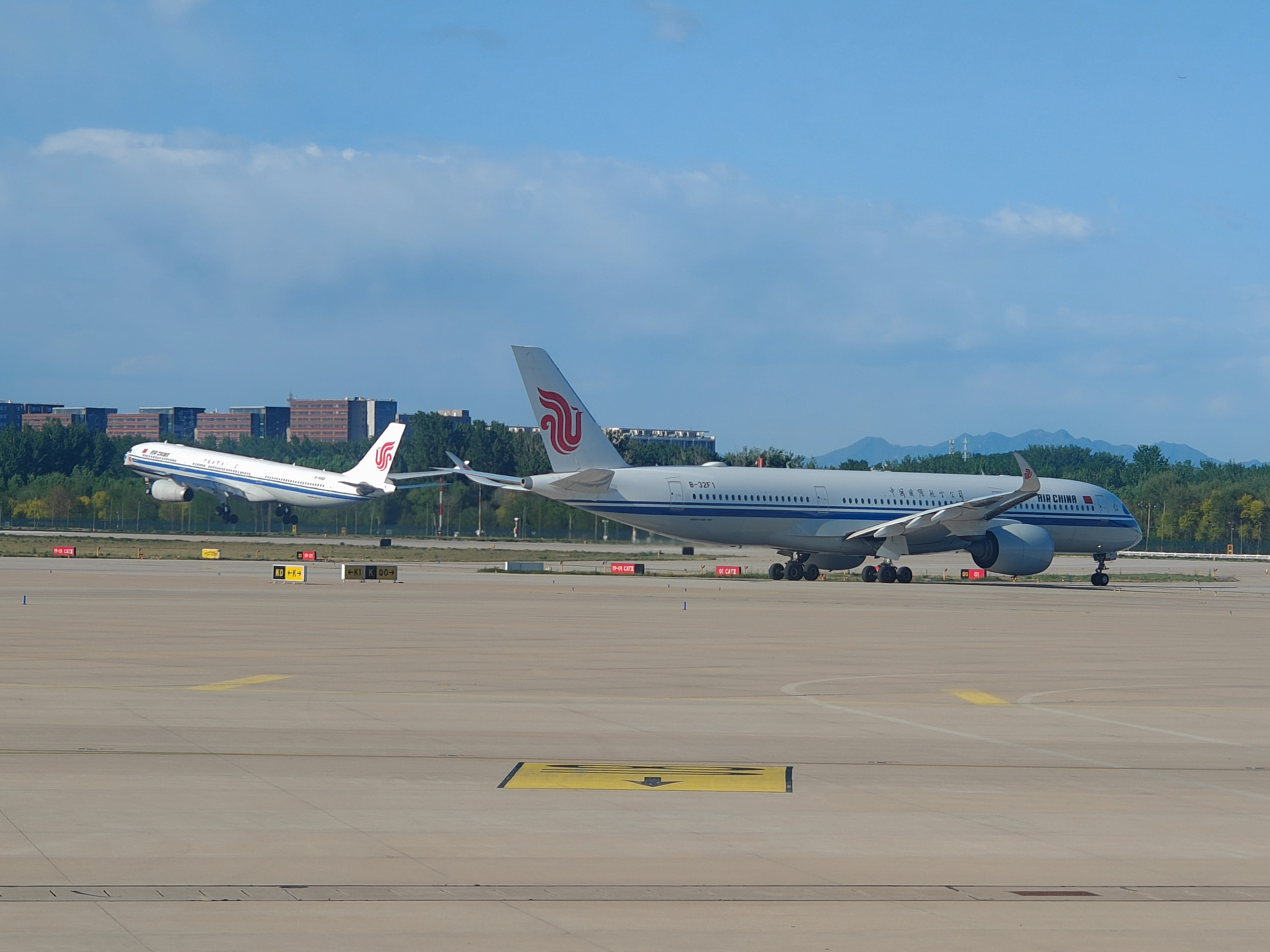
The 330 behind it was probably taxiing out ready to line up, which shows just how close that spot is to the runway.
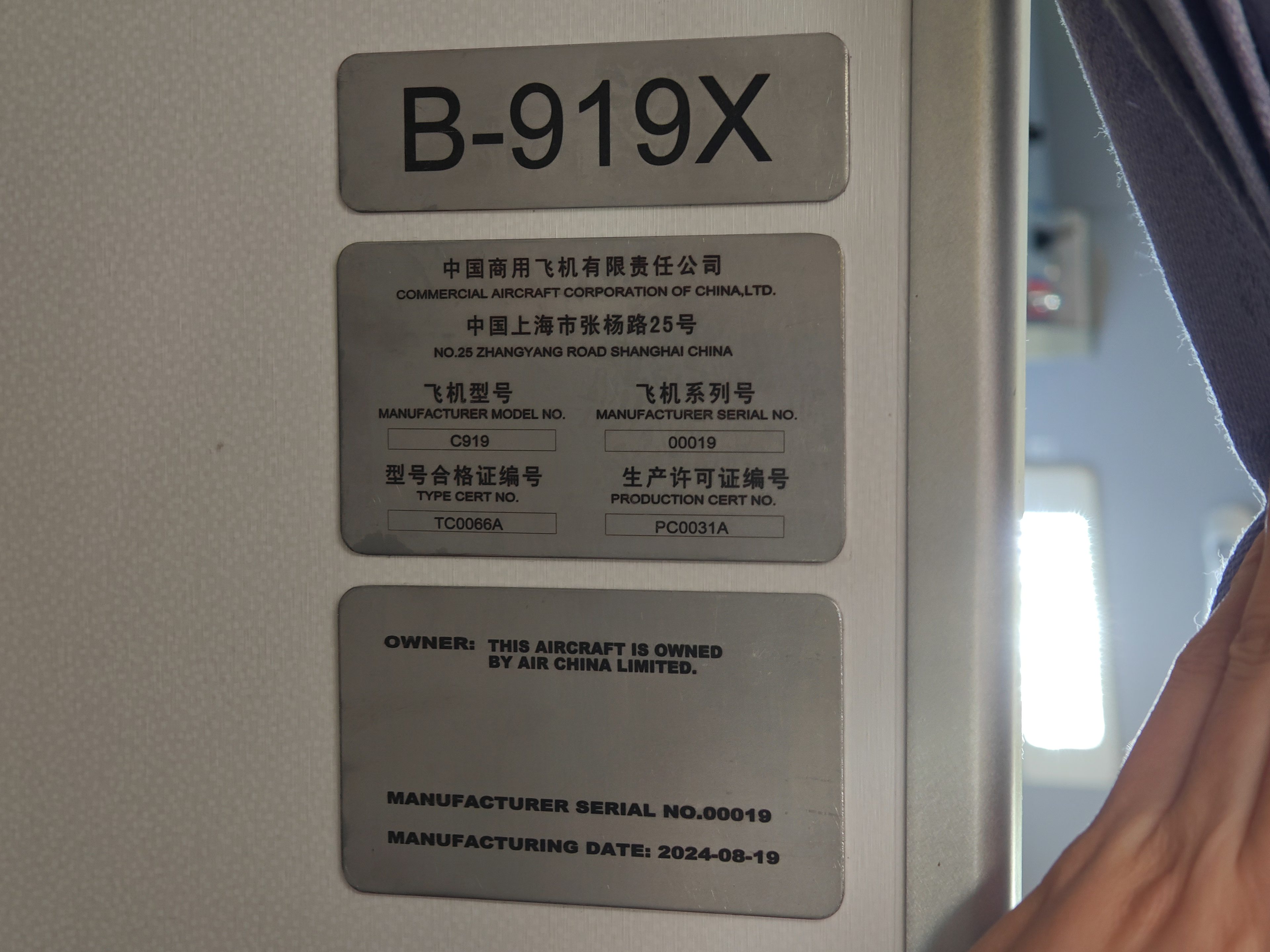
After boarding I was holding up my phone and looking around for the sign, and the flight attendant immediately understood, pulled the curtain open for me and told me it was right there.
This is Air China’s first C919, registration B-919X. That tail number is quite special, since Air China’s first three are named X, Y and Z.
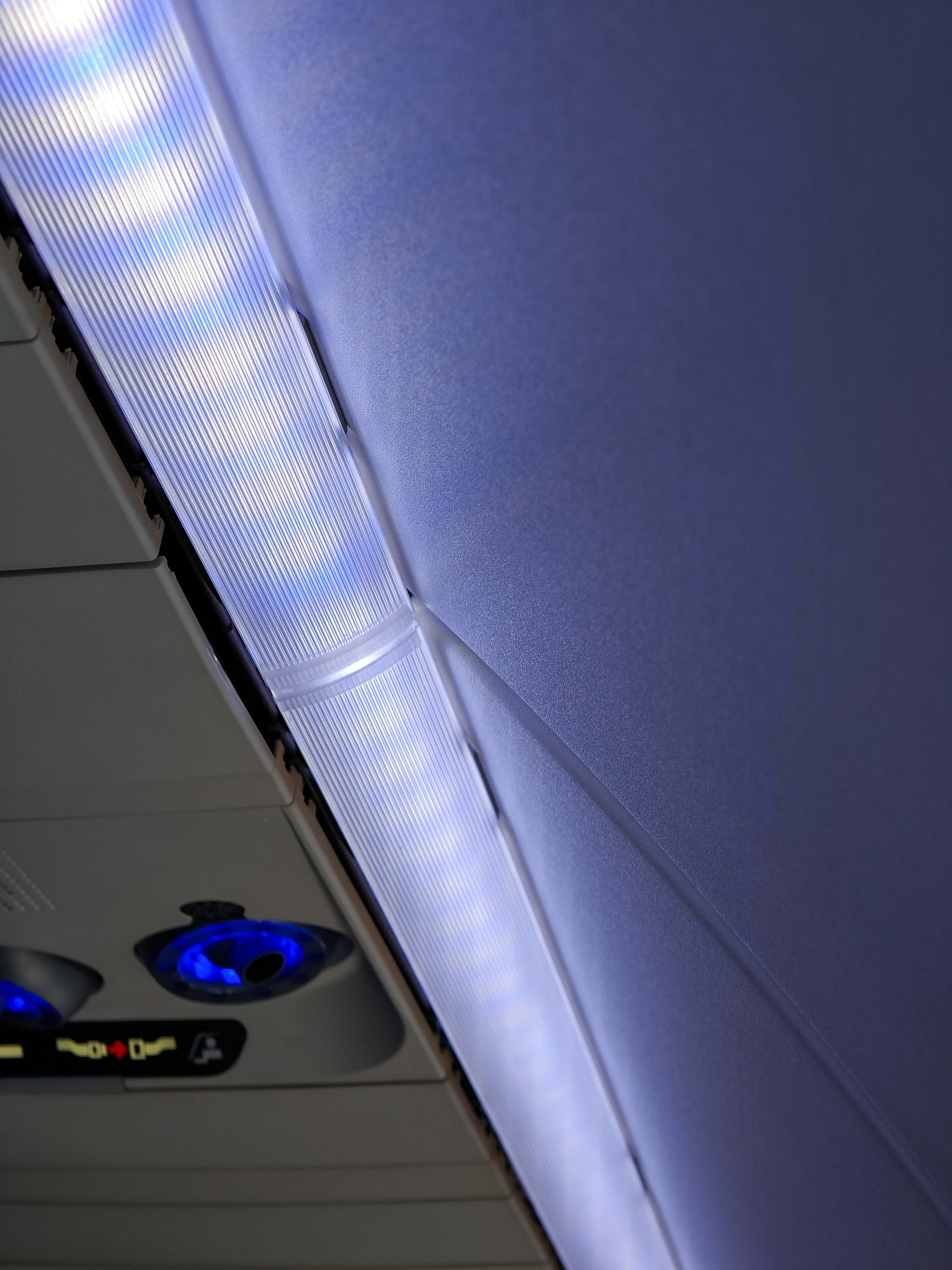
The cabin lighting uses a lot of blue, including the air vents and reading lights, which pushes the correlated colour temperature of the cabin lighting very high. It does not feel great.
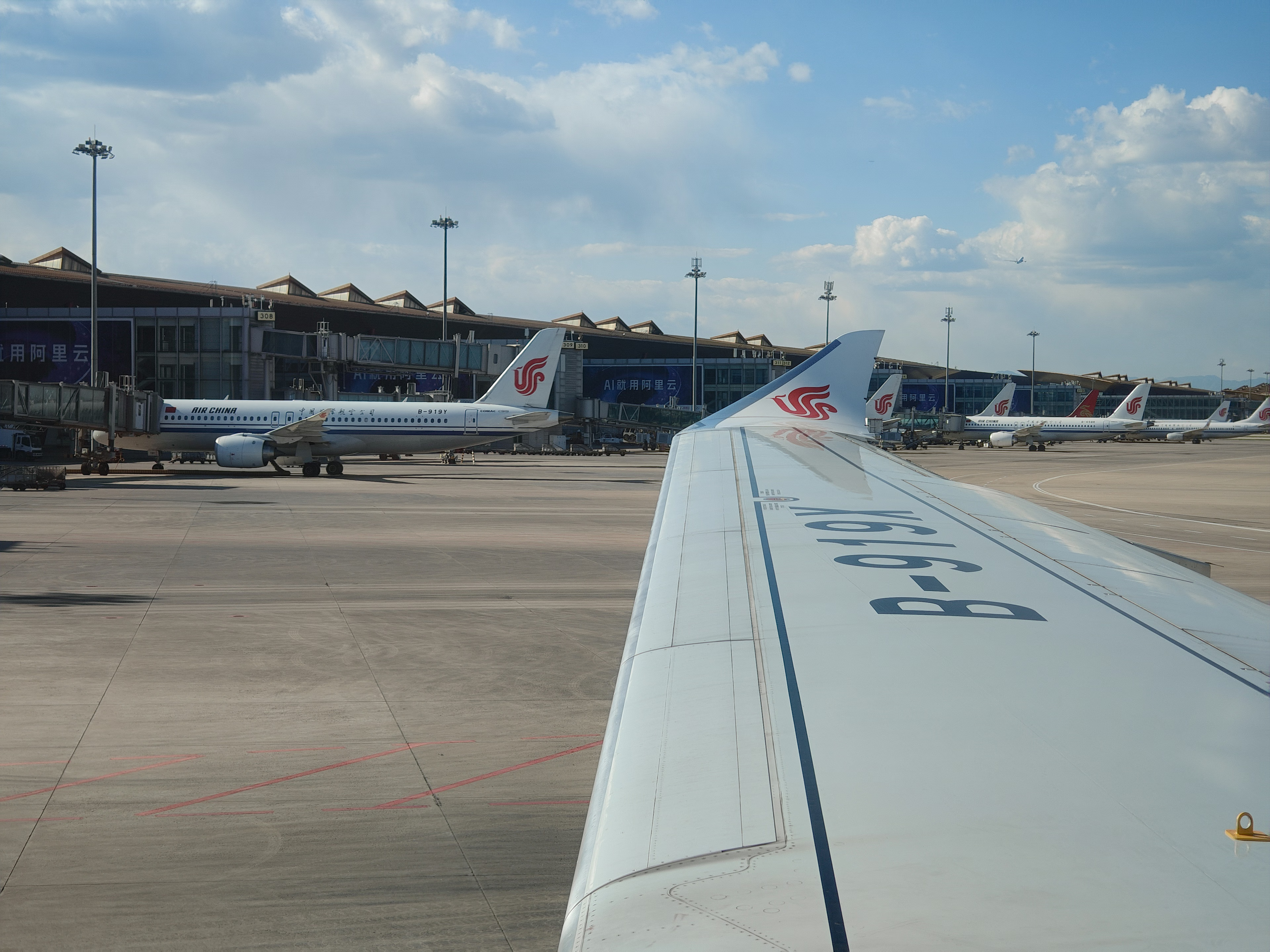
Parked at the next stand is Air China’s second C919, B-919Y.
We queued for take-off, and ahead of us were an A330 and two A350s. From this position you push back, turn a corner and you are on the runway, a very advantageous spot, and I wonder whether it has anything to do with the C919.
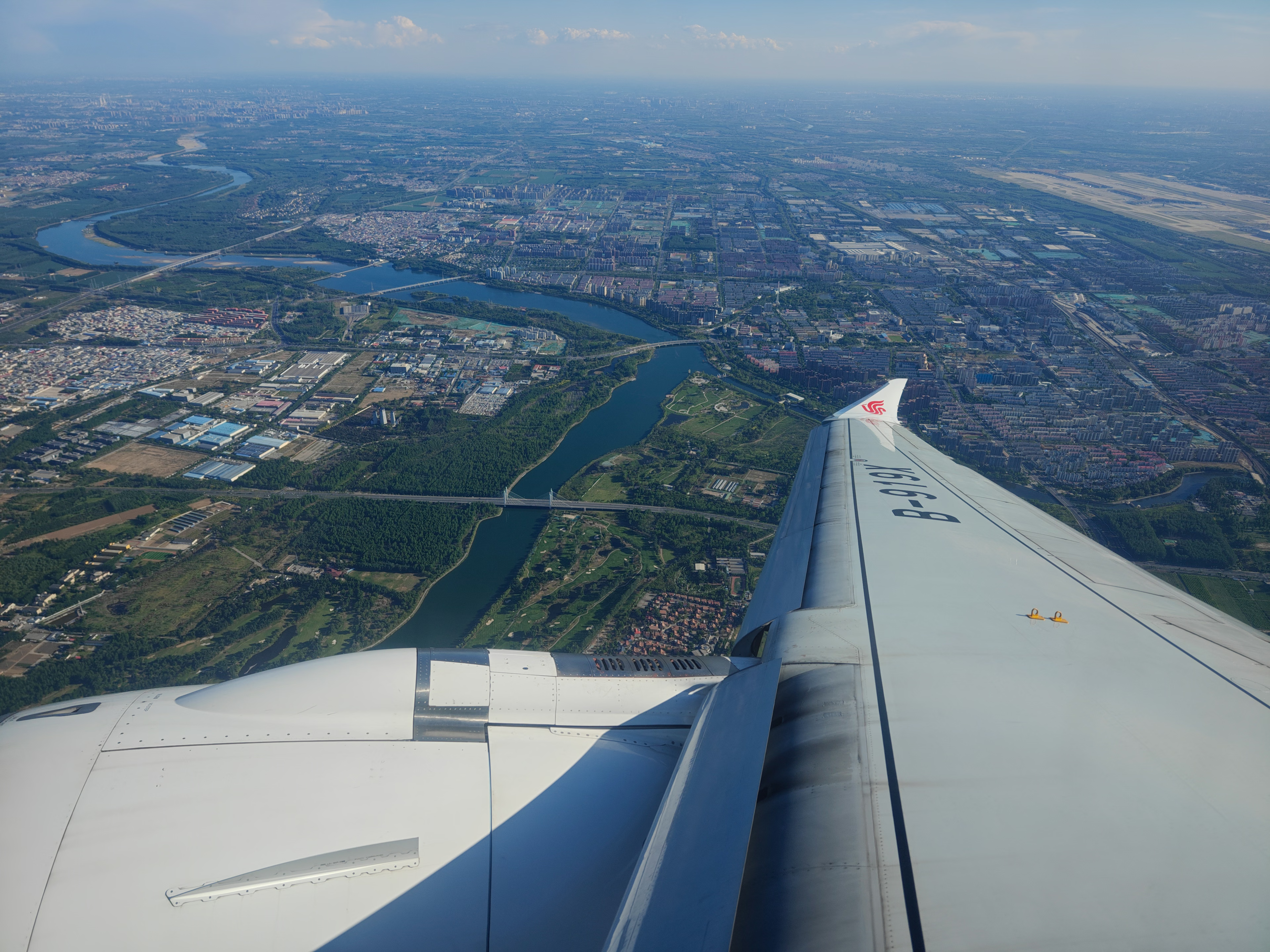
Turning after take-off from Capital Airport, the weather in Beijing that day was lovely. From this angle you can see the elegant curved winglet of the C919, a little like a scaled down A350.
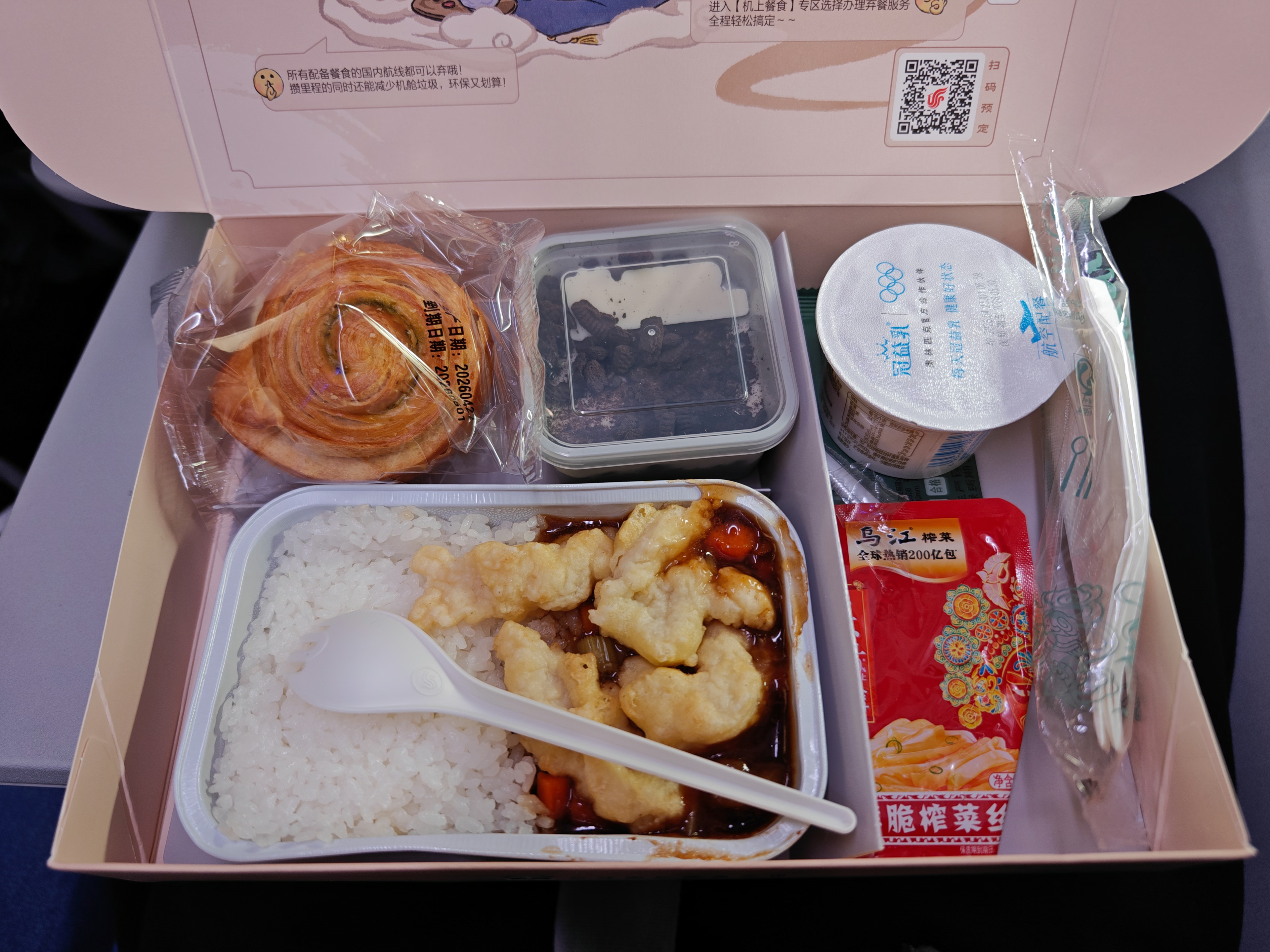
The meal did not seem to be anything special, though the box had some 919 elements printed on it.
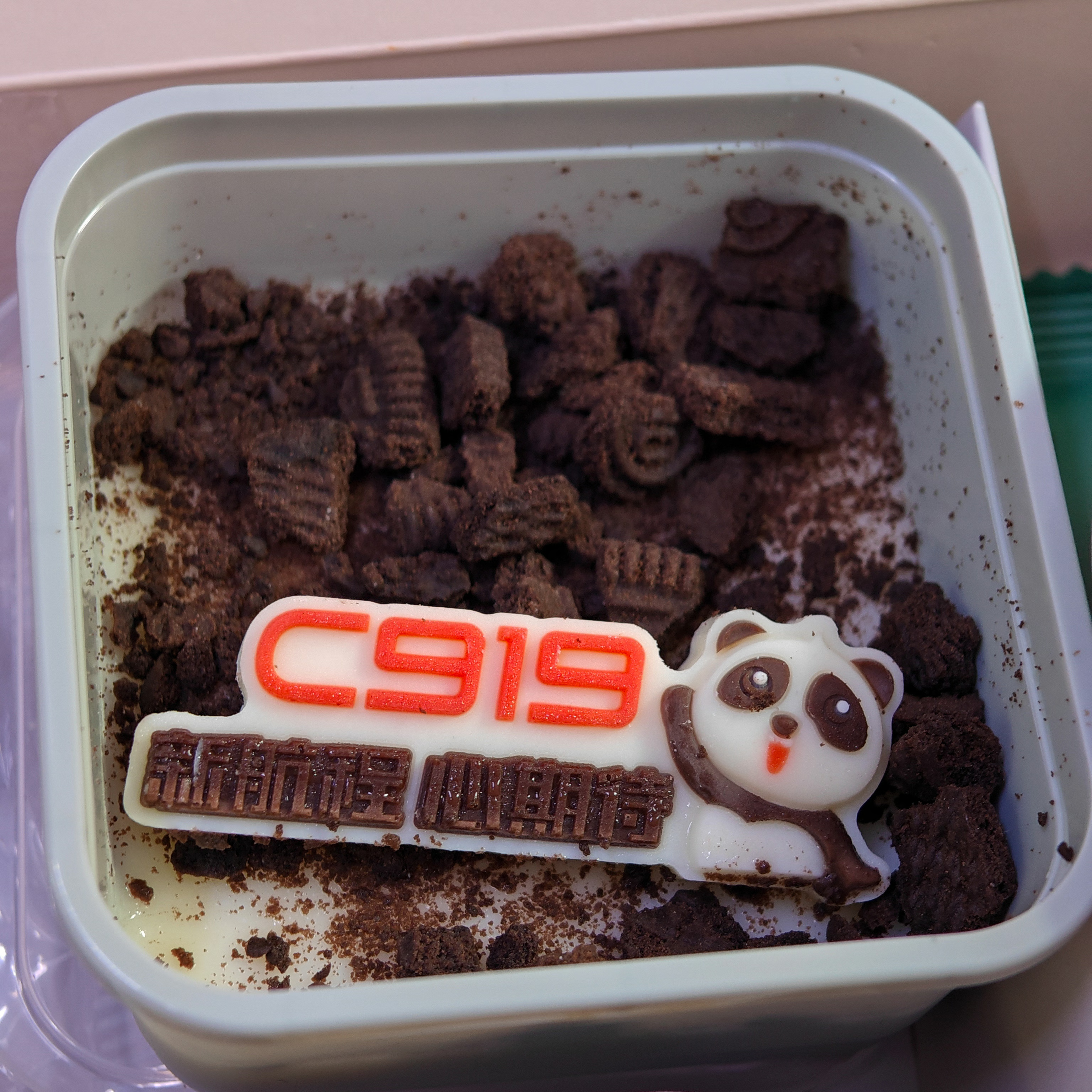
It turned out the special part was the chocolate plaque on the dessert.
The LEAP-1C looks nicely filled out hanging under the C919’s wing. Just after start, while the engine spools up, there is a moment in some range where it feels like it resonates with the fuselage, rattling away.
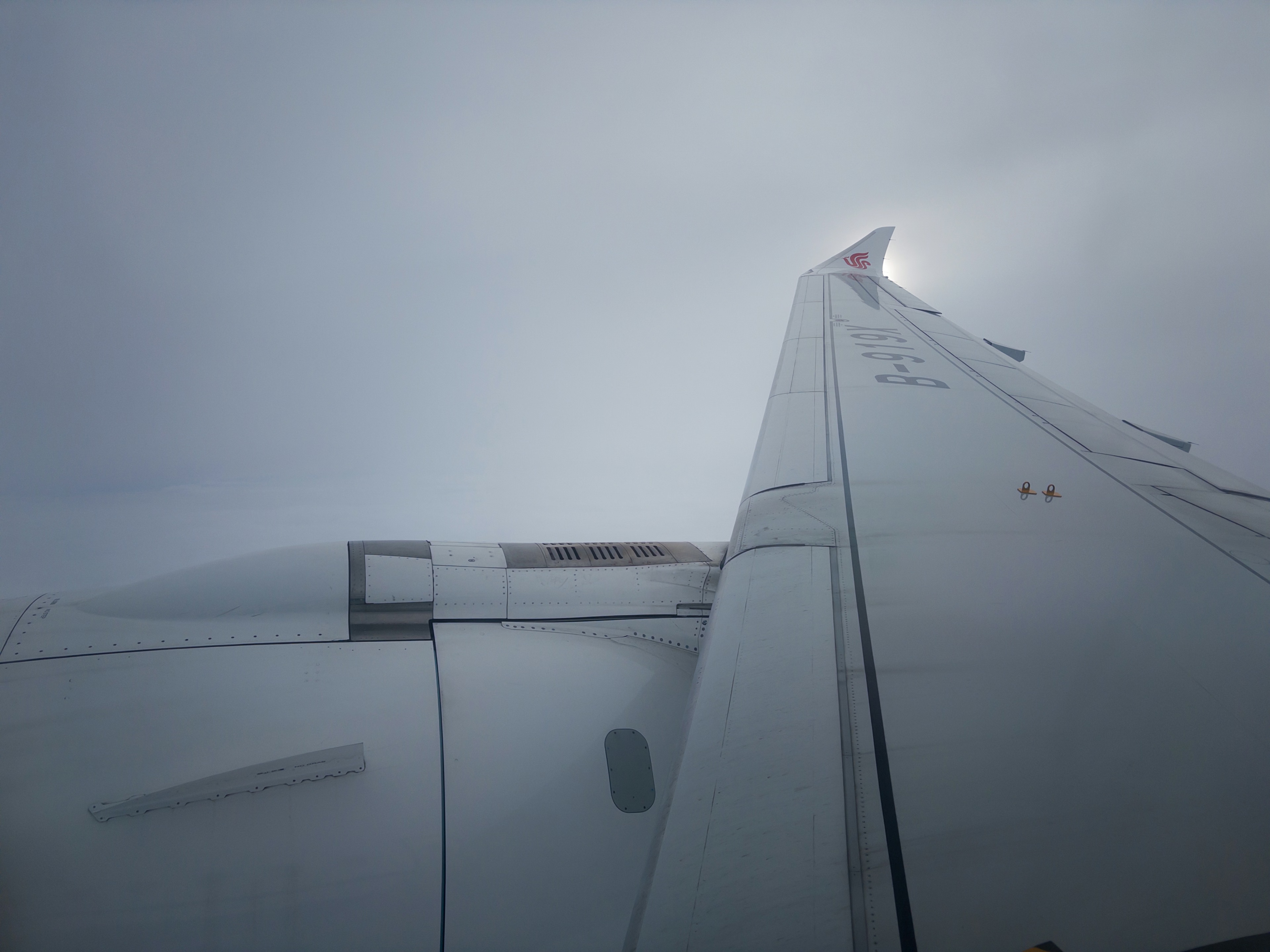
Arriving in Hangzhou we also parked at a stand very close to the exit, though I do not know whether that is because of the C919 or because it is the Beijing–Hangzhou shuttle.
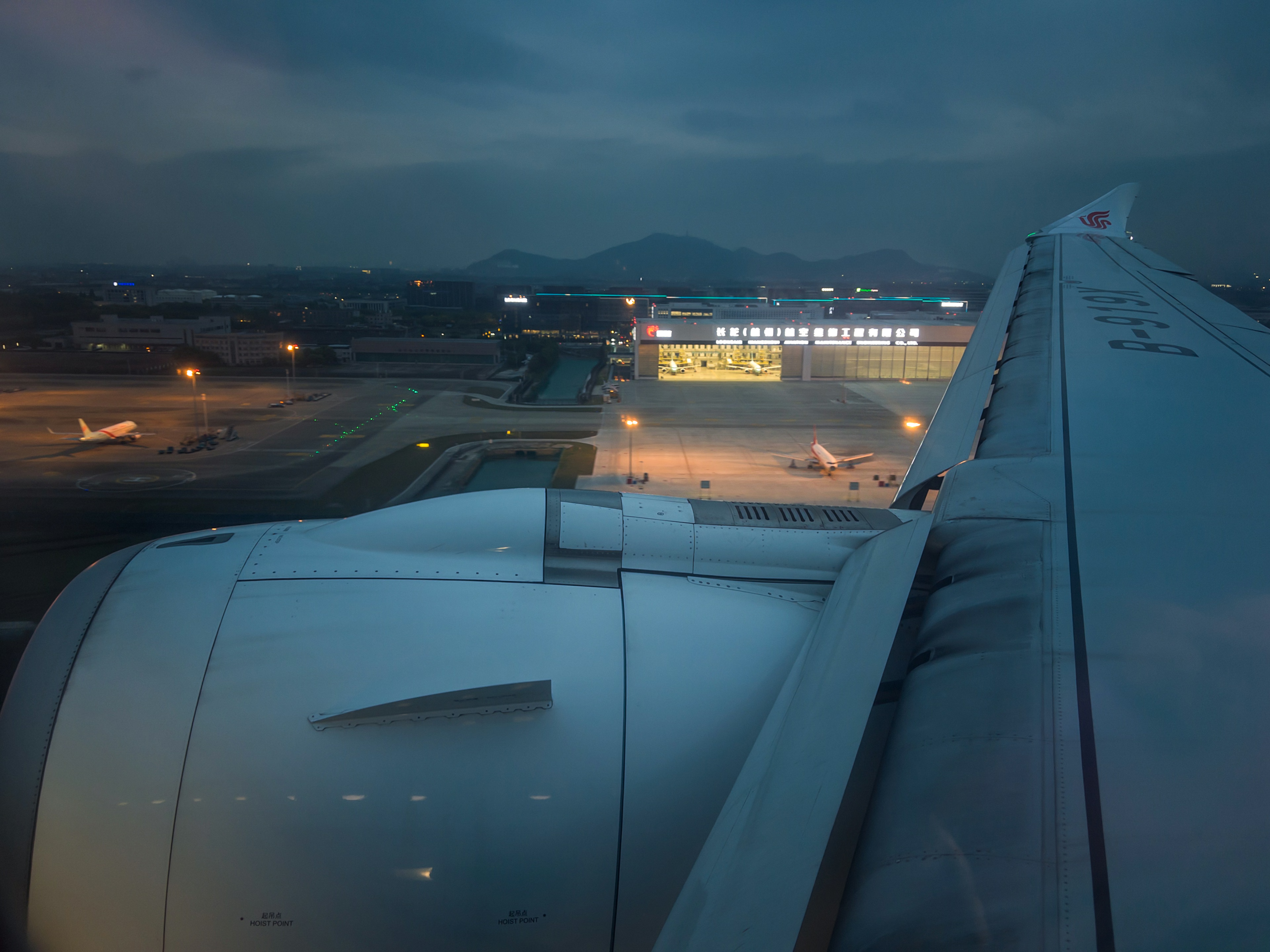
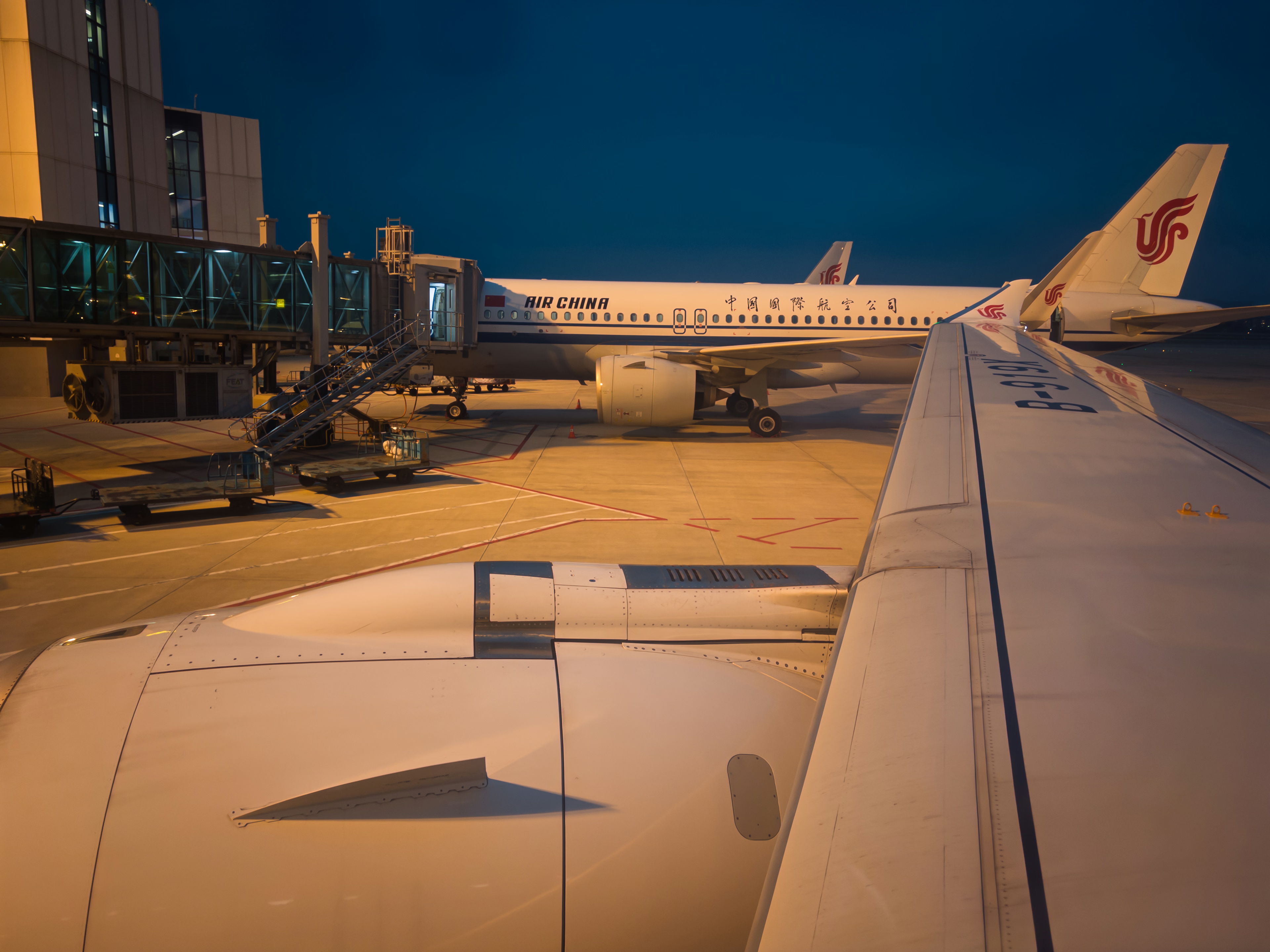
Up to this point it was a perfect experience, very much on time, and clearly well looked after.
I heard that the next morning, when this B-919X operated the Hangzhou to Beijing flight, it could not depart normally for some reason, and the flight was delayed until the afternoon and eventually departed on a different aircraft.
Either way, flying and watching aircraft is always a pleasure, especially when the aircraft is a rare one built by our own people (I hope “rare” is only temporary).